
TCA/NZSA Writers' Award
A $25,000 award for non-fiction writers of any genre, including education material. The award enables the successful applicant to devote time to a specific writing project.
Proudly brought to you by the New Zealand Society of Authors (NZSA) and Tāwhia Copyright Aotearoa.
How to apply
Entries Open | 13 June |
Entries Close | 18 July |
Entries to Selection Panel | Week of 21 July |
Each short-list circulated | 22 August |
Winners List & Comments | 25 August |
Invoice judging fee – $600 | After 27 August |
Awards Evening | September (dependent on discussions for venue for suitable awards live event / or online event / or announcement via media release etc |
Sign up to our newsletter to be notified when applications open.
Selection Panel Composition
The 2025 Selection Panel Members are:
- Elizabeth (Libby) Kirkby-McLeod (convenor)
- Jade Kake
- Iona Winter
History
Copyright Licensing New Zealand ran similar Writers’ Awards between 2002 and 2013 and from 2016 to now.
Recipients of these awards and the resulting published books are as follows:
- 2024: Mark Derby for his project, with the working title, ‘Outlaw Prophet – Hakaraia Mahika and the Tauranga Wars,’
- 2023: Tom Doig for his project with the working title ‘We Are All Preppers Now: Kiwis Making Plans for the End of the World
- 2022: Iona Winter, for her creative non-fiction project, ‘A counter of moons’
- 2021: Jade Kake, Rewi: Āta haere, kia tere (Massey University Press)
- 2020: Nick Bollinger, Revolutions Per Minute: The Counterculture in New Zealand 1960-1975 (Auckland University Press)
- 2019: Rebecca Macfie, Helen Kelly: Her Life (Awa Press)
- 2018: Nic Low, Uprising: Walking the Southern Alps of New Zealand (Text Publishing)
- 2017: Ben Schrader, Won and Lost: Saving New Zealand’s Built Heritage 1885-2017 (unpublished)
- 2016: Neville Peat, The Invading Sea (Cuba Press)
- 2013: Margaret Pointer, Niue 1774 – 1974 (Otago University Press)
- 2013: Geoff Chapple, Terrain (Penguin)
- 2012: David Veart, Hello Girls and Boys! A New Zealand Toy Story (AUP)
- 2012: Hazel Petrie, Outcasts of the Gods? (AUP)
- 2011: Melissa Williams, Panguru and the City (BWB)
- 2011: Malcolm Mc Kinnon, The Broken Decade (Otago University Press)
- 2010: Dame Christine Cole Catley, unpublished
- 2010: Steve Braunias , Civilisation (Awa Press)
- 2009: Peter Wells, The Hungry Heart (Penguin)
- 2009: Damian Skinner , The Maori Meeting House (Te Papa Press)
- 2008: Philip Norman, unpublished
- 2008: Hazel Riseborough, Shear Hard Work (AUP)
- 2007: Martin Edmond, Zone of the Marvellous (AUP)
- 2007: Jeffrey Paparoa Holman, Best of Both Worlds
- 2006: Stevan Eldred-Grigg, Diggers, Hatters and Whores
- 2006: Judith Dell Panny, Plume of Bees
- 2005: Rowan Taylor, unpublished
- 2005: Jill Trevelyan, Rita Angus – An Artist’s Life
- 2004: David Eggleton, unpublished
- 2004: Lloyd Spencer Davis, Looking for Darwin
- 2003: Paul Millar, No Fretful Sleeper, A Life of Bill Pearson
- 2002: Dr Sarah Quigley, unpublished
Guidelines
- The Selection Panel will choose 3 applications and rank then from 1 to 3.
- These recommendations will be presented to the CLNZ Board for their approval.
- The author of the 1st ranked application will be offered the Award. If this author is not able to accept the Award, it will then be offered to the next-ranked applicant
The recommended applications must:
- Add value to New Zealand’s non-fiction collection
- Be of interest to the NZ public / educators / students
- Be commercially viable (thus making it more likely to be published)
- Be by an author that the Selection Panel believes will deliver a work that can be published
A successful application is one that:
- Shows the applicant knows and can write accurately and engagingly in the field or genre
- Presents a New Zealand project that adds significantly to the field, body of work on the subject, or genre, is of high national significance and will not date quickly
- Presents a CV that shows the applicant’s achievements as a writer, significant experience in the field they propose to write in, or whose record gives the selectors confidence that they can achieve the project.
- Presents a well-organised and detailed outline of the project
- Presents a working plan that is realistically budgeted and time-lined
- Includes a written statement from a publisher that expresses interest in publishing the finished work (where available)
Other factors to be considered are:
- Does the project embody key people, movements or issues in NZ life?
- Is the project fully-developed with evidence of access to subjects, people and/or sources that will inform the work?
- Does the proposal clearly demonstrate that the proposed work is not duplicating existing publications and fills a ‘gap’ in NZ’s non-fiction list, including gaps in NZ education resources?
- Is the majority of the research completed with a chapter by chapter outline written?
- Is there evidence that the writer can deliver to a deadline?
- Is it a project that is likely to attract funding for the same purpose (ie. Writing) from CNZ or some other source? Ability to attract funding for other purposes (e.g. research or publisher support) should not count against the application
- Is the presentation of the application such that it shows the writer is well-organised and committed to seeing the project through?
- Does the proposal address consultation with Iwi, where relevant to the project?
- Is the project an original work rather than a compilation?
- Will text, rather than the images, be of prime importance?
- Will the financial assistance provided by the award make a significant difference to the applicant and make the writing of the project possible?
Historically, the CLNZ Board has endorsed the Selection Panel’s recommendations but does have the right to reject a recommendation if they have knowledge about an application that the Selection Panel may not have considered.
Procedures
Applications close on 18 July 2025
- In the week starting 21 July each Selection Panel member will be sent by email the applications – all supporting documents will be available to view and read online.
- By 22 August each judge is to communicate to the others and to NZSA their short-list of 10 applications. Each panel-member’s list will be ranked 1 – 10, based on their preferences.
- The Selection Panel can either work by email, videoconference, phone or NZSA can organise a physical meeting, to discuss the short-lists and agree the preferred recipient and 2 other applications. Claire Hill from NZSA is available to assist the panel as needed.
- By 25 August the panel members will give the results to NZSA and each write a few sentences on what they liked in each of the top 3 applications, as well as a short summary of the overall applications for the Award.
- This will be provided as part of a report to the CLNZ Board which will be prepared by the CLNZ CEO.
- After 27 August and the completion of the above, judges can invoice NZSA for $600, to be paid as a judging fee.
Conflict of Interest
Panel Members are expected to declare any direct, indirect or perceived conflict of interest in relation to any application they are assessing. This should be made clear in the long-list provided to NZSA/CLNZ prior to the Judges Meeting taking place. A Panel Member who declares a conflict with an entry will take no part in assessing that entry.
Privacy
As a selection panel member you will review application information electronically, and will be provided with access to this information online. Please do not make copies of applicant information. Principle 9 of the Privacy Act 2020 states that “an organisation should not keep personal information for longer than it is required for the purpose it may lawfully be used”. At the conclusion of the selection panel process, please check and confirm via email to awards@copyright.co.nz that you do not have any applicant information stored on your computer, including in your emails, Downloads or Trash folder.
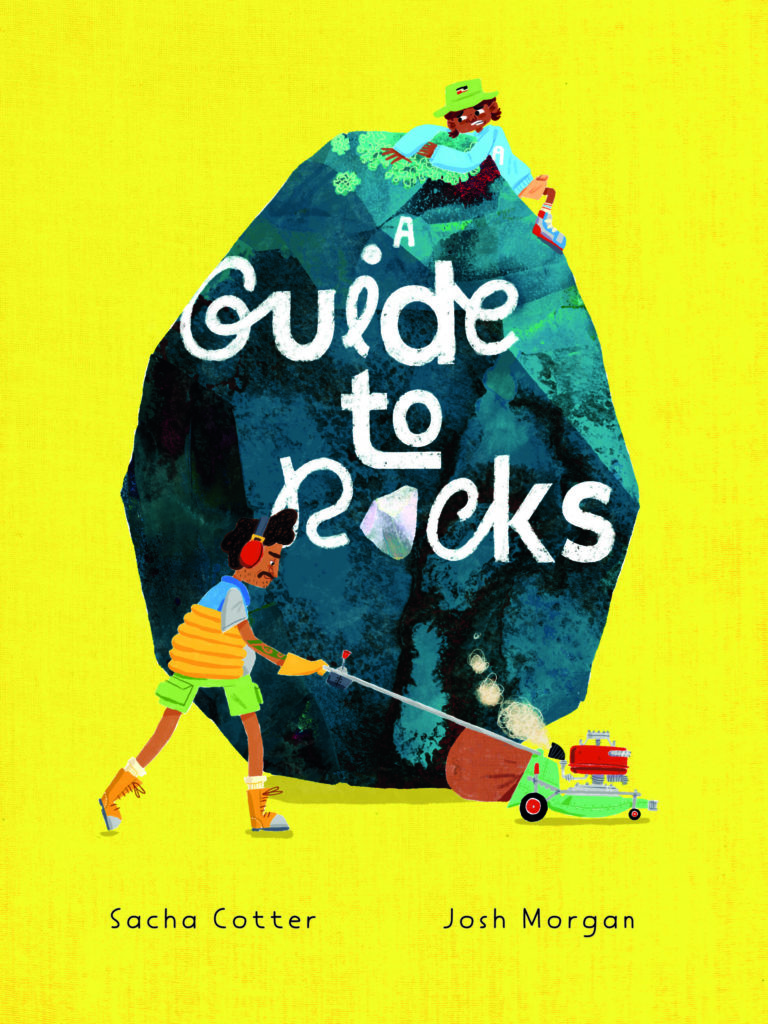
A Guide to Rocks, Sacha Cotter, Josh Morgan © Huia Publishing 2023